
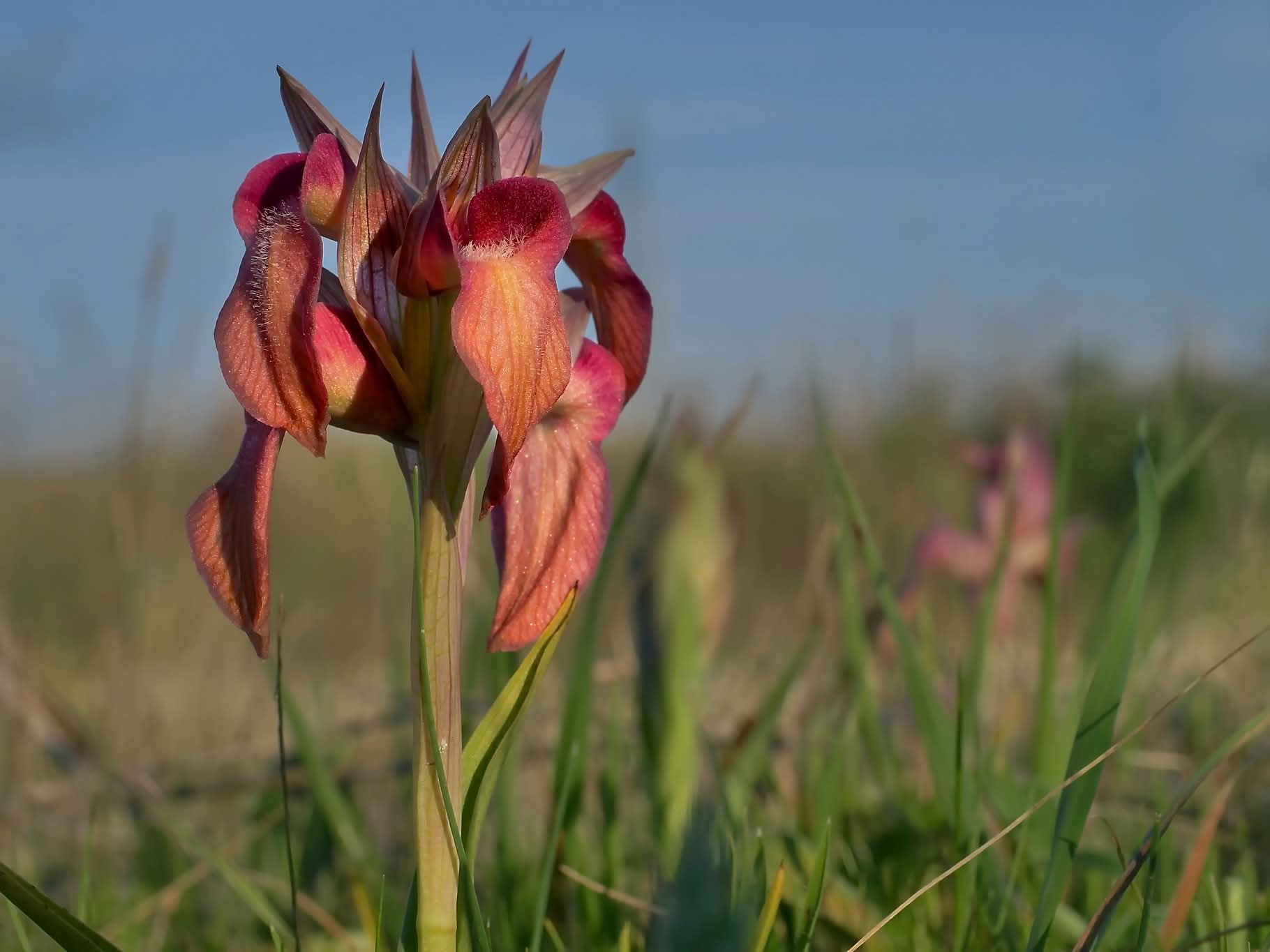
In a corner of the garden, where the soil is allowed a little more freedom to breathe, something unexpected happens every spring.
They arrive in silence.
No one plants them, no one calls them.
And yet, they return.
Wild orchids.
Around Poggio, and especially in the nearby hills of San Carlo, these delicate presences have always existed. They grow where the land has not been forced — where the balance between light, water, and time remains intact.
Here, we have learned not to look for them, but simply to notice them.
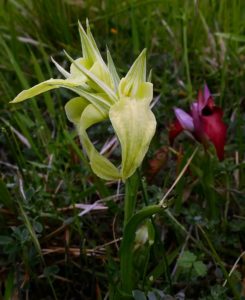
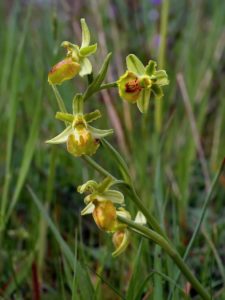
Among the species that appear, you can recognize Ophrys apifera, also known as the “bee orchid,” which mimics the shape of the insects it depends on; Orchis purpurea, taller, almost regal; and Serapias lingua, with its deep tones emerging like a small flame in the grass.
They are not cultivated in the traditional sense.
They are welcomed.
A garden that nourishes, without forcing
At Poggio, the garden is not divided between what is useful and what is beautiful.
Everything is part of the same gesture.
We cultivate what can nourish us — vegetables, herbs, fruits — following rhythms older than ourselves. Without chemicals, without forcing, without accelerating the seasons.
Alongside what we harvest, we always leave space for what simply exists.
The orchids remind us of this.
They do not give us something to eat, and yet they are part of the same balance that makes everything else possible. Their presence is a sign: the soil is alive, the system is working, the harmony has not been interrupted.
In this sense, they may be the most honest indicator of our work.
An agriculture that is at once edible, sustainable, and organic — but above all, respectful.
A way of cultivating that does not separate production from landscape, but holds them together as a single living organism.
Custodians, not owners
To cultivate in this way does not mean to control.
It means to listen.
We observe where the orchids choose to appear, and we adapt.
We leave certain areas untouched.
We learn to step back.
Because this land is not something we own.
It is something we pass through, gently.
To be custodians means to protect what cannot be replicated.
It means allowing beauty to exist without necessarily turning it into something useful.
It is the same perspective through which we live Poggio:
in the spaces, in the kitchen, in the time we offer to our guests.
It is not about adding, but about removing the superfluous, so that what is essential can emerge.
A different kind of luxury
In a world that constantly seeks more — faster, bigger —
there is a quiet richness in what returns, year after year, asking for nothing.
The orchids bloom for a short time.
Many guests never even see them.
But those who do, often pause.
And something shifts.
The feeling that the land is still alive.
That there is still a subtle language we have not completely forgotten.
And that, by slowing down just a little,
we can still learn to listen to it.
Francesca